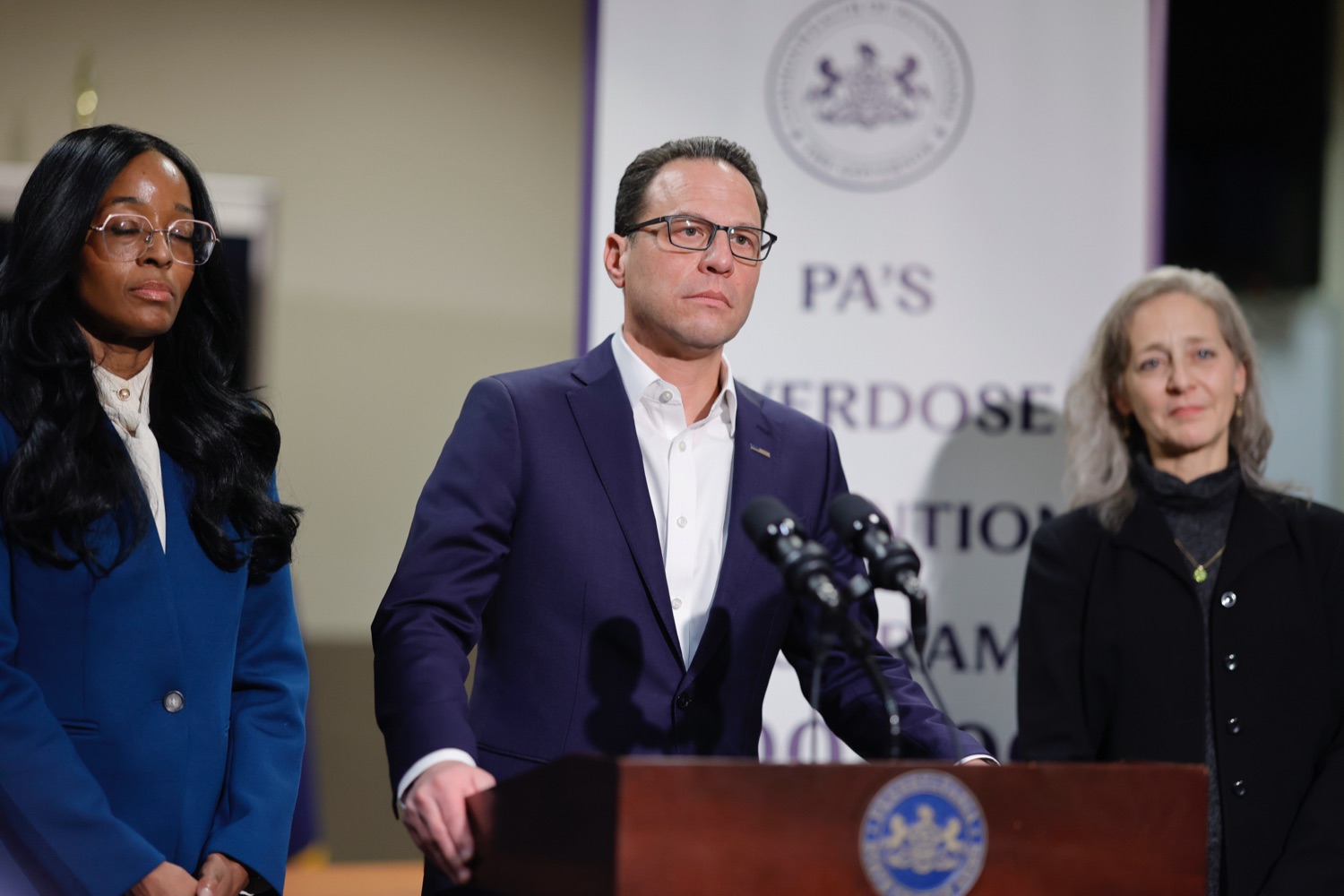
Last Friday Governor Josh Shapiro, alongside Pennsylvania Department of Drug and Alcohol Programs (DDAP) Secretary Dr. Latika DavisJones and Health (DOH) Secretary Dr. Debra Bogen, visited the Wyoming County Emergency Management Agency to lead a roundtable discussion on efforts to save lives, prevent fatal overdoses, and support families struggling with substance use disorder.
The visit followed the release of the Shapiro Administration’s Overdose Prevention Program Annual Report, which details significant progress in reducing overdose deaths across Pennsylvania.
Between October 2024 and September 2025, frontline organizations reported over
11,400 overdose reversals linked to naloxone distributed through the Administration’s
initiative — representing thousands of lives saved through timely intervention. Early
estimates show that in 2025, Pennsylvania saw the fewest overdose deaths in more
than a decade.
“Every life saved is a reminder that a smart, compassionate, multidisciplinary response
to the opioid crisis works,” said Governor Shapiro. “Since day one, my Administration
has invested in proven, life-saving tools — getting naloxone into communities,
expanding access to treatment, and meeting people where they are. The results are
clear: overdose deaths are down, thousands of Pennsylvanians are alive today, and
more families have hope. We will keep doing this work until every Pennsylvanian — no
matter their zip code — has access to the care and support they deserve.”
During the roundtable, the Governor heard from officials, and Ashley Bunnell, a person in recovery working in substance use treatment.
“Under Governor Shapiro’s leadership, we’re seeing progress because he is investing in
proven lifesaving strategies; his unwavering commitment to Pennsylvanians struggling
with substance use disorder is what public health leadership looks like,” said Secretary
Davis-Jones. “As part of his Administration, we are working every day to ensure
Pennsylvanians in all zip codes have access to treatment, prevention, and recovery
supports and no one is left behind simply because of where they live—we must
continue to meet people where they are.”
According to data from the Department of Health, overall overdose deaths are falling in
Pennsylvania, including Wyoming County. However, overdose death rates among communities of color continue to remain higher than among white and non-Hispanic
individuals.
In 2024, Black Pennsylvanians died from an overdose at a rate that was two times higher than white Pennsylvanians.
“While we are encouraged to see the fewest deaths from overdose in over a decade, we
know our work is far from over,” said Secretary Dr. Bogen. “The Department of Health
is a critical partner in the state’s fight to reduce overdose deaths, providing the standing order for naloxone and the real-time data needed to stay ahead of an ever-changing drug supply. We will continue to provide education about the importance of naloxone, offer provider education to increase stigma-free care, training for first responders, and provide data for evidence-based interventions.”
How the Overdose Prevention Program Work:
The Overdose Prevention Program is a statewide initiative led by DDAP to expand
access to naloxone and drug checking tools to prevent fatal overdoses and strengthen
overdose response.
Through nearly 100 statewide partners, DDAP distributed more than 824,000 doses
of naloxone and 922,000 fentanyl and xylazine test strips from October 2024 to
September 2025. Partners reached individuals in clinical settings, recovery programs,
libraries, churches, campuses, drop-boxes, mail-based distribution, mobile outreach,
and other places. The supplies were provided directly to the people most likely to
witness or experience an overdose, including individuals who use drugs, family
members, peers, and service providers.
The program operates through a hub-and-spoke model, reaching both urban, suburban, and rural communities efficiently, with targeted support for those at highest risk.
All overdose prevention partners can be located through DDAP’s website.
Investing in Overdose Prevention, Treatment, and Recovery:
Since the start of the Shapiro Administration, DDAP has invested more than $85
million in overdose prevention, treatment, and recovery. Initiatives include $40 million
for the Substance Use Disorder (SUD) Loan Repayment Program, which has helped
nearly 675 recipients statewide, as well as telehealth-only licenses for providers,
mobile treatment units like Driving Recovery for PA, and opening a State Health Center in Wyoming County in 2025 to expand rural health access.
In addition to the Overdose Prevention Program, the Shapiro Administration has worked since day one to implement successful initiatives, including:
● Establishing exceptions to licensing regulations that allow for telehealth-only
SUD services to expand treatment accessibility statewide
● Licensing mobile opioid treatment programs to pave the way for increased
access to medication-assisted treatment
● Launching a workforce development pilot program with Carlow and Waynesburg
universities to accelerate the training of new substance use treatment
professionals
Many of the organizations the Shapiro Administration is supporting are receiving grant
funding from the $2 billion in opioid settlement funds secured by Governor Shapiro
when he was Pennsylvania’s Attorney General.
24/7 Help
Individuals seeking substance use treatment or recovery supports can be connected to
local SUD resources by calling the toll-free PA Get Help Now helpline at 1-800-662-
HELP (4357) or by using Treatment Atlas, a free, online or smart phone locator tool to
help Pennsylvanians confidentially find SUD treatment that meets their needs.
In addition, local treatment programs are administered through county drug and alcohol offices called Single County Authorities. These programs can help with treatment funding, assess the need for treatment or other services, and make referrals to match treatment and/or service needs.
Learn more about the Shapiro Administration’s efforts in combating the overdose crisis
at ddap.pa.gov.










 Cops, Courts & Fire -Bristol Township4 weeks ago
 Cops, Courts & Fire -Falls Township2 weeks ago
 Breaking News - Bristol Township4 weeks ago
 Human Interest - Bensalem Township3 weeks ago
 Cops, Courts & Fire -Bristol Township3 weeks ago
 Cops, Courts & Fire -Bristol Borough4 weeks ago
 Breaking News - Bensalem Township2 weeks ago
 Cops, Courts & Fire -Bristol Borough2 days ago