



The following was written by Amy Yates Wuelfing of DiWulf Publishing House on the demolition of a Historical subculture landmark in Trenton, New Jersey: City Gardens

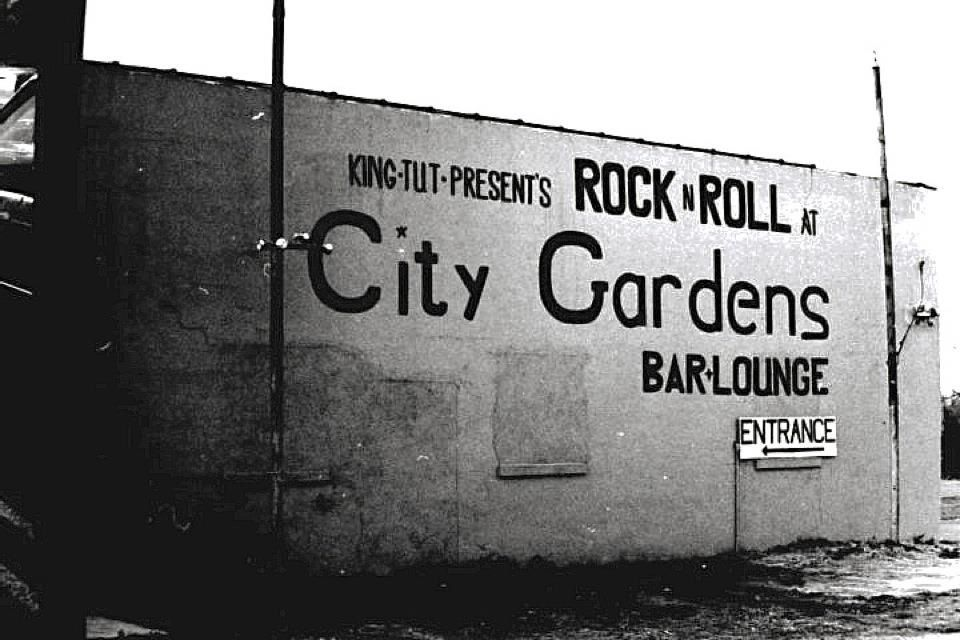
It was a beautiful, sunny afternoon in Trenton, NJ. The sky was blue, air was clear. I was standing in a pile of rubble, picking through the remains of a building that had meant so much to me, looking for a chunk of cinder block, something still carrying the distinctive pink paint that had covered the outside of City Gardens.
Another car pulled up and I knew immediately it was another City Gardens regular who had come to do a little digging, hoping to find an artifact to take home. No explanation necessary.
Others came by, too, and I imagine they will continue to come, at least for a while. People stopping to pay their respects, to stand where the building once stood, to see for themselves that it was really gone. Maybe take home a piece of something that, for a few hours or a few years or an entire lifetime, had felt like theirs.
The demolition had been a long time coming. For at least seven years, there were rumors that the city was going to tear the place down. “Any day now,” we were told. Any day. But the gears of city politics grind slowly, and somehow the building hung on, a stubborn reminder of a time and place that had long since passed. A car crashed into it and left a gaping hole that someone fruitless put plywood over to keep people out. It didn’t work.
I heard through the grapevine that several people had gone inside a few years ago and rescued the giant mirrored disco ball that had hung over the dance floor since the 1980s. I hope that’s true. They don’t make them like that anymore, I tell ya.
I understand why the building had to go. Buildings deteriorate. Property changes hands. Cities move on, or at least try to. But standing there in the rubble, I couldn’t help thinking about all the things that building had witnessed, all the people who had passed through its doors, and all the lives that had been changed inside those walls. City Gardens meant so much to me, and was such a fundamental part of my formation as a human being, that I eventually wrote an oral history of the place, No Slam Dancing. I interviewed well over 100 people, and I kept hearing variations of the same story: City Gardens and the people who I met there changed my life.
The book started out as a biography of Randy Now, the man who promoted so many of the legendary shows and helped build the club’s reputation, although he wasn’t the owner. But as I began talking to people, I realized I was chasing a much bigger story. Randy was an important part of it, certainly, but City Gardens belonged to a much larger cast of characters. The place had become something that none of them could have created alone.
Credit: Diwulf Publishing House
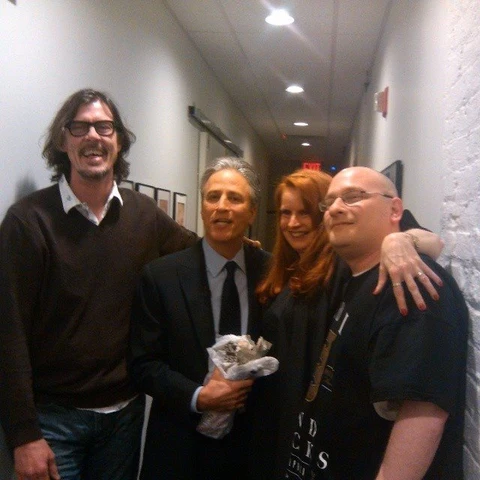
There was comedian Jon Stewart, who reportedly landed a bartending gig after showing up on 90 Cent Dance Night and dancing by himself. There were tweens whose parents dropped them off to see bands, and if they had known what was actually going on in that building they would have been horrified. There were bands passing through on their way to stardom, playing City Gardens before the rest of the world knew who they were. And there were bands that could have played much bigger venues but kept coming back because they liked the place. They liked Randy Now and the people. They liked what happened there.
The stories were wildly different, but they shared a common thread. City Gardens was a place where people found something they hadn’t been able to find anywhere else.
It was a refuge for misfits, outsiders, weirdos, punks, skinheads, goths, hardcore kids, new wavers, and anyone else who didn’t quite fit into the world outside. It didn’t matter whether you were a kid from Trenton, a suburban teenager whose parents had no idea what you were getting into, a musician looking for an audience, or someone who simply couldn’t stand the thought of another night doing what everyone else was doing. There was a place for you at City Gardens.

Amy Yates Wuelfing, Diwulf Publishing House.
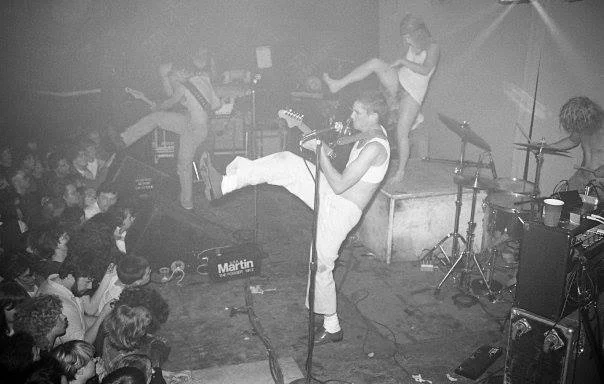
It wasn’t pretty. The place was a filthy scuzzy mess. The bathrooms? Legendary. The place could be dangerous and sometimes it was downright scary, but we liked it that way. The rough edges were part of the appeal. They kept out the commoners, the people who wanted everything neat and tidy and predictable. The music wasn’t what you heard on FM radio. The clothes we wore weren’t from the mall. We weren’t looking for the things everyone else wanted. We were looking for our people.
Before the internet, before cell phones, before social media made it possible to find a thousand people who shared your interests without ever leaving your bedroom, there was City Gardens. You had to show up in person. You had to stand in a room with strangers, sweat through a show, get knocked around a little, maybe discover a band you never heard of that would change your life. You had to be there. In person.
Credit: Ken Salerno
What emerged from all those interviews was the story of a disjointed, dysfunctional community, but it was never some utopian gathering of like-minded souls. People fought. People disagreed. There were rivalries, excesses, bad behavior, sometimes hatred, and plenty of reasons why someone might have decided never to return. We weren’t all best friends, and we didn’t all like the same music. But we shared a place, and that place gave us something in common that was bigger than our differences. It gave us a “community,” whether we knew what to call it or not.
Here’s something I think about: I’m not friends with anyone I went to college with. I have only one friend from high school. But I’m still friends with dozens of people I met through City Gardens. These are people who have been part of my life for decades, people I might not have met otherwise, people whose paths crossed mine because we happened to show up at the same sketchy club.
We grew up there, in a way. We figured out who we were, or at least who we didn’t want to be. We found the music that spoke to us, the clothes that made us feel like ourselves, and the people who understood us when the rest of the world didn’t seem particularly interested in trying.
The building itself was never much to look at. That’s part of what made the whole thing so remarkable. There was no grand architectural statement, no beautifully restored interior, no carefully curated experience. There was a big room with a stage, a bar, a disco ball, and some giant amps. The magic wasn’t in the bricks and mortar. That is why the demolition feels both inevitable and yet anti-climatic. We knew it was coming. We had years to prepare ourselves for it, years of rumors and speculation and false alarms. But knowing something is going to happen doesn’t necessarily make it easier when it finally does. It’s gone, but it was really already gone.
Standing in that rubble, searching for pink paint, I was trying to preserve something that couldn’t really be preserved. A fragment of a wall isn’t City Gardens. Neither is a disco ball, a flyer, or a photograph. Those things are important, and I’m glad people have saved them. They help us remember. They give future generations something tangible to connect with. The part that remains standing is the people, relationships, and the memory of the time you first walked into the building and found your niche.
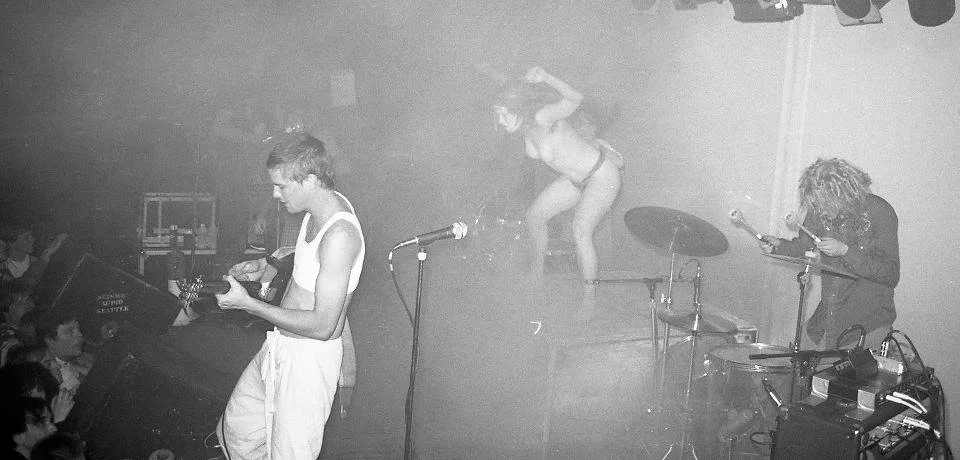
They’re the friends who still show up for one another decades later. They’re the stories that get retold at reunions and over drinks. They’re the bands whose music we still listen to, the records we still own, the clothes we still can’t quite bring ourselves to throw away. They’re the people who found the confidence to be themselves because, when they went to City Gardens, they were surrounded by people who didn’t think they were strange.
Credit: Ken Salerno
They’re the people who can pull up to a demolition site on a beautiful afternoon, see someone else picking through the rubble, and know exactly why they’re there.
The City Gardens building is gone. There will be no more shows there, no more nights under that disco ball, no more emerging from its doors into the Trenton night with your ears ringing and your clothes soaked with sweat. The place was the music, the bands, Randy Now, the bartenders, the kids pressed against the stage, the people dancing by themselves, and the people who found one another in the crowd. It was the freedom to be different in a world that seemed determined to make everyone the same. It was the knowledge that somewhere, in a beat-up pink building, there were people who spoke your language.
City Gardens remains—in the friendships that have lasted a lifetime, in the music that still rattles around in our heads, in the stories we tell, and in the lives we built after finding our people. And if you ever wondered what made that place so special, consider this: decades after the last show, people are still showing up to dig through the rubble and take home a brick.
We were always looking for something at City Gardens.
Some of us are still looking. And some of us, if we’re lucky, found it.
DiWulf Publishing is an independent publishing company dedicated to documenting subculture
Credit: Amy Yates Wuelfing, Diwulf Publishing House




Recent Comments