


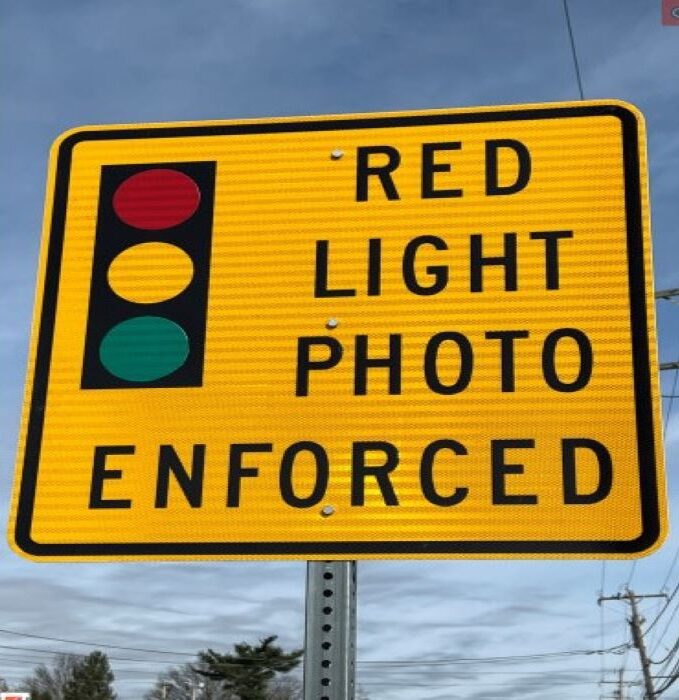
The Bristol Township Police announced two more red light cameras will go live beginning Wednesday at two targeted intersections “notorious” for motorist speeding to reduce crashes and increase pedestrian safety.

The automated red light enforcement will begin on Wednesday December 17th at Veterans Highway and Wharton Road/Old Rodgers Road and Veterans Highway and Western Avenue.
For the first 30 days there will be no fines issued to motorists caught speeding on Veterans Hwy at the two camera locations, officials said. After the 30-day grace period (January 17th) violators will be issued summons for $100
According to the township, red light cameras prevent serious crashes; encourage motorists to stop on red; make intersections safer for everyone.
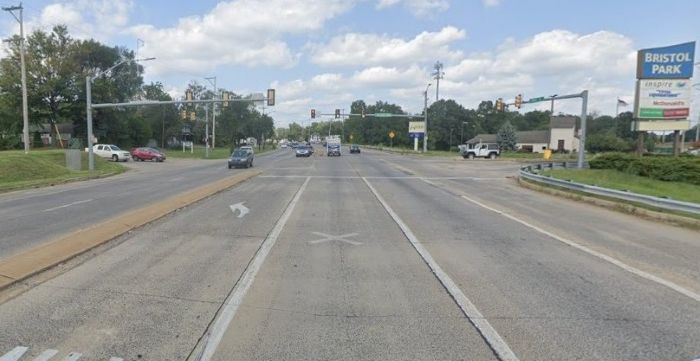
Credit: Google Maps
There are opponents to red light cameras, such as the National Motorists Association who say the use of such traffic safety measures backfire, in a sense, because rear-end crashes increase substantially when and where red light cameras are implemented.
Thomas McCarey, of Berwyn, PA also an anti-red light camera advocate, has a different take all together on traffic centered safety approach.
It’s a money grab by municipalities and the state. If they just enforced the laws already on the books there would be no need for red cameras, he’s said in a number of communications with this news organization.
The township launched the traffic safety measures this past summer with the installation of red light cameras at Green Lane and Edgely Road.
This past October the township sought public input and commentary about the red light cameras of which the results are unknown to best of this publications knowledge.
Chief of Police of Police C.J. Winik at an unrelated community event last month told reporters about the first motorist caught doing 100 mph earning local infamy and public shaming on the Lower Bucks Source Meta page.
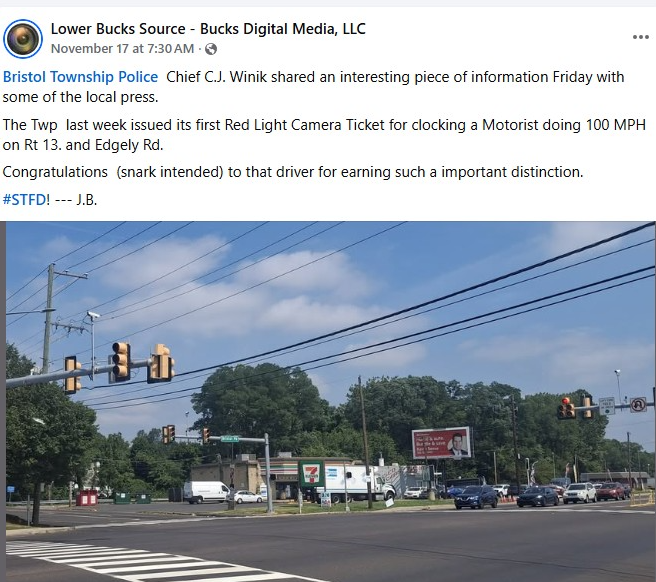
Credit: Lower Bucks Source Meta Page
The post itself, broke social media records for this publication in terms of commentary and audience engagement on the page. Some commenters questioned the veracity red cameras can actually gauge motorist speed and or velocity.
Red light cameras can measure a vehicle’s speed (or velocity, which is speed with direction) using sensors like inductive loops, radar, or video analysis often to determine if a car is going too fast to stop safely before entering a red-light intersection, capturing evidence for a violation by taking multiple photos, according to the National Highway Traffic Safety Association.



Tom McCarey
December 16, 2025 at 6:05 pm
I never said: “…If they just enforced the laws already on the books there would be no need for red cameras,…”
Red light camera boosters don’t want you to know that in many jurisdictions where red light cameras are active accidents and injuries have increased, including Philadelphia.
Bristol Township’s red light cameras will be utterly despised by most of the township’s residents and visitors. The public has become aware that almost all tickets given by red light cameras go to safe drivers who endangered no one, and the only real results are monetary.
Simply adding one second to the yellow intervals on the township’s traffic lights would be almost certain to immediately reduce the violation rates by significantly more than 6 to 12 months of using the cameras can achieve.
But you will likely find that PennDOT will refuse to allow Bristol Township to make that simple adjustment to improve safety by more than the cameras can achieve. WHY will they likely refuse? That will likely happen because Automated Red Light Enforcement (ARLE) programs are for-profit ways for PennDOT to accumulate funds they can pass out to communities they favor for whatever reasons. Government departments like PennDOT gain power and influence in relationship to their total budgets, and the ARLE program increases their total budget revenue to give them more power and influence.
But if the yellow intervals are lengthened by one second to reduce the violation rates by at least 60% and more likely 70% to 90%, then ARLE cameras would issue too few tickets for the total fines to pay the $4,000 to $5,000 per month per camera costs and the program would lose money. Without profits, PennDOT and the for-profit camera companies will not be interested in the program.
Megan
December 18, 2025 at 6:30 pm
If you want to do a good story, interview Jay Beeber at the National Motorists Association. He can discuss best-practice engineering and enforcement. These things being done would eliminate the need for cameras.