


Human Interest - Bensalem Township
Rep. Hogan to Reintroduce Bill to Protect Pennsylvanians from “Predatory” Utility Sales Tactics













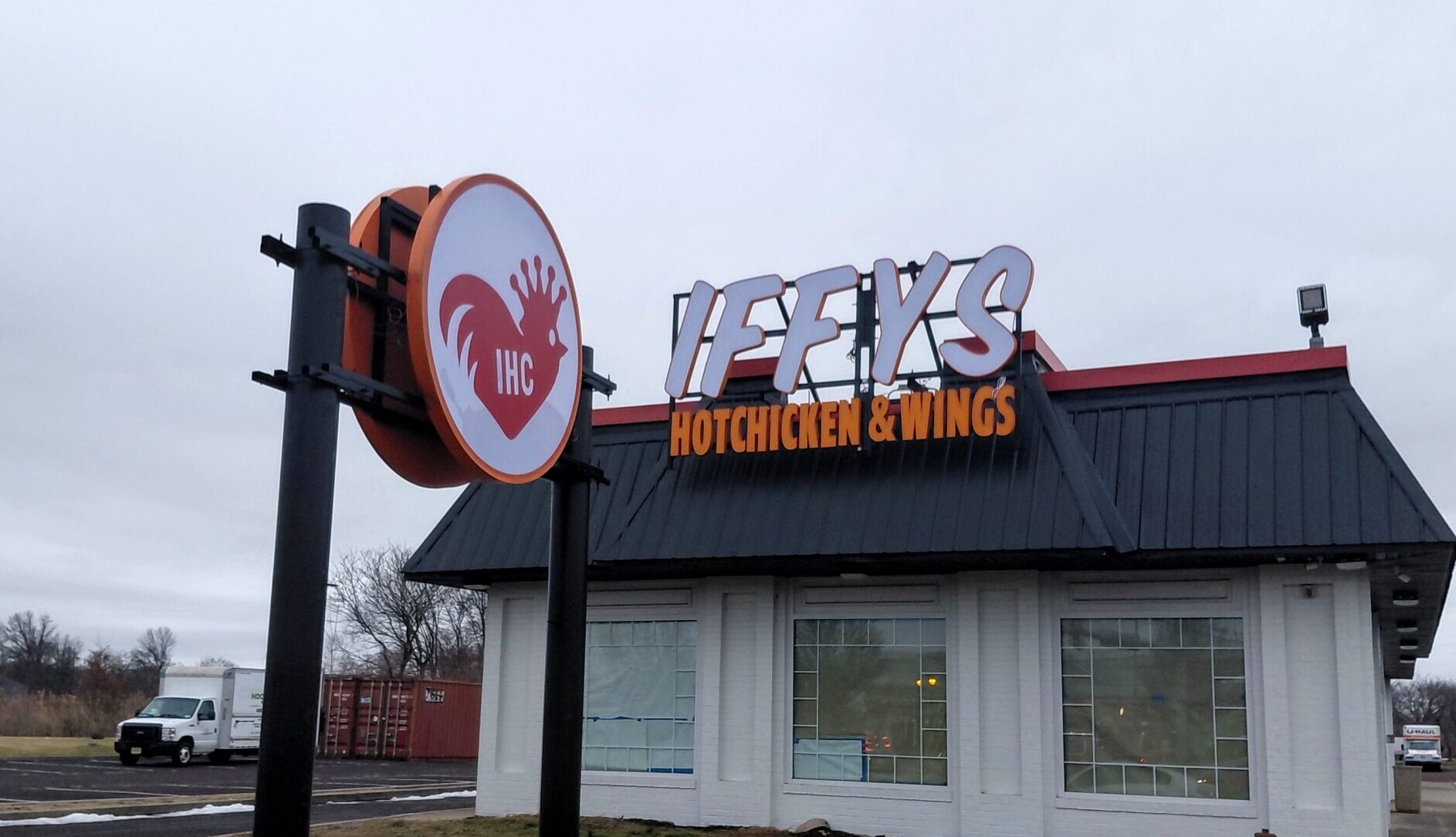
A New Jersey based hot fried chicken chain is expanding across the Delaware River into Pennsylvania with signage appearing at a busy Bristol Township intersection last month.
Iffy’s Hot Chicken will be opening for business in the coming weeks at the corner of Durham Road and Veterans Highway (Route 413) company officials said as work on the site continues.
An official opening date has not yet been announced. However, it will be posted on the eatery’s Meta page in the days before the grand opening happens, the company said.

Credit: Submitted
The site, where KFC used to sit, has been vacant since the chain closed its Bristol Township location a decade ago.
Iffy’s Hot Chicken was launched in Burlington, New Jersey, and has since expanded to additional locations in New Jersey and New York.
Owner Iffy Shah told NJ.com last year he planned to open up to 30 new locations in the near future.
Iffy’s continues to grow an avid customer base built on its signature item of hot spicy chicken, wings and fries with its various toppings.
The Durham Road / Veterans Highway (Route 413) site is going through its own little redevelopment as it was recently announced U-Haul is expanding its operations at that location which was recently approved by Bristol Township.
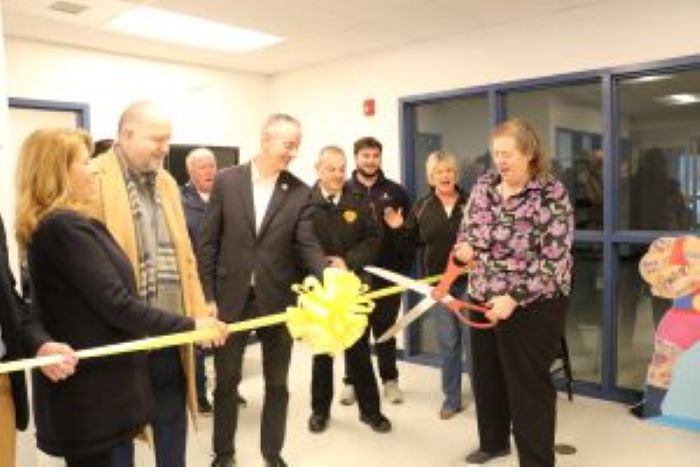
An incredibly special afternoon launched the grand opening of the brand new Bristol Township Senior Center last week as local, state and federal officials celebrated the opening of the center that for many seniors is a lifeline.
It was about 18 months ago officials came together for the project’s groundbreaking.
“Our seniors are the heartbeat of our community. They are parents, grandparents, veterans, mentors, volunteers—the very hands who shaped our neighborhoods and country. Ensuring they feel supported, valued, and connected will always be a top priority of mine,” Congressman Brian Fitzpatrick (R- Bucks) said.
Fitzpatrick obtained $4 million in federal funding for the new “state of the art” center.
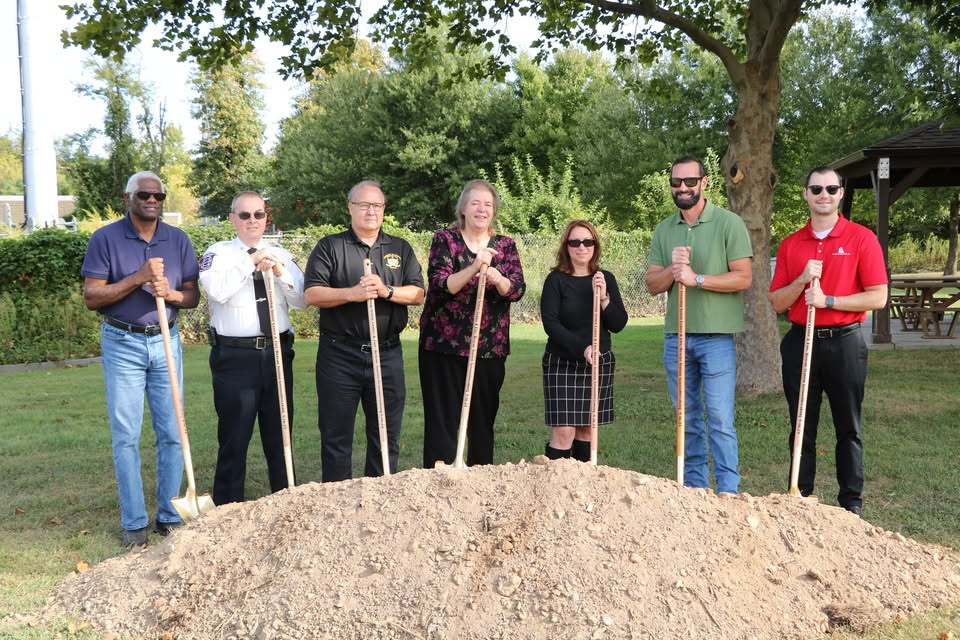
The groundbreaking for the new twp senior center in the Fall of 2024 Credit: Bristol Township Senior Center
“I am so thrilled to have been a part of making this special day a reality — having worked closely with state Sen. Steve Santarsiero’s office to secure $2 million in funding for this center. Seniors, like everyone else, deserve to have dedicated spaces to build a community, make friends, learn about resources, and have fun,” said state Rep. Tina Davis (D-Bucks)
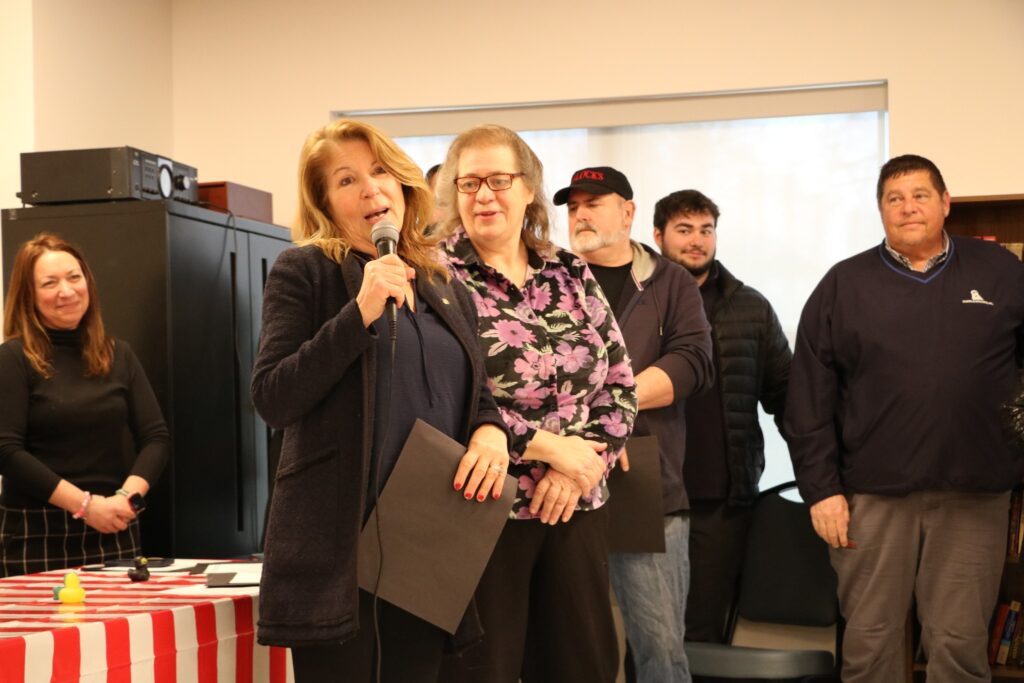
Rep. Tina Davis & senior center director Bonnie Worth
Credit: Bristol Township Senior Center
“I had the pleasure of helping Rep. Tina Davis, Congressman Brian Fitzpatrick, Bristol Township Supervisors Craig Bowen and Patrick Antonello, and Bristol Township Manager Randee Mazur cut the ribbon at the new Bristol Township Senior Center. I was proud to secure 2 million in state funding for this project with Rep. Tina Davis,” Santarsiero said.
“Spaces like this are so important for bringing our area together, creating opportunities to build community, and providing resources for our seniors. Communities that are more connected are happier and healthier!” he added.
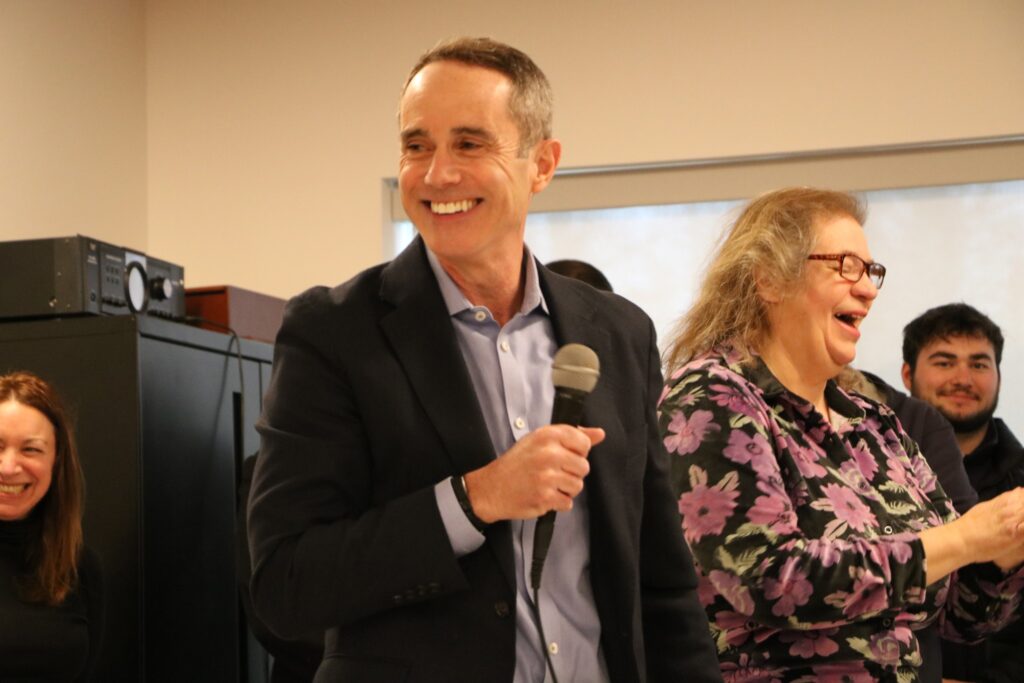
State Sen. Steve Santarsiero & Bonnie Worth
Credit: Bristol Township Senior Center
The state-of-the-art space is designed for connection, enrichment, expanded programming, improved access to services, and safe gathering, officials said.
Director Heather Dune Macadam screens her award-winning documentary, ‘The Forgotten Girls’ of the Holocaust” in the Zlock Performing Arts Center at the Bucks County Community College (BCCC) Newtown Campus.
Edith Grosman was seventeen when Slovak officials ordered unmarried Jewish girls to register for work service. Filled with a sense of national pride, she joined hundreds of other innocent young women who were under the false impression their patriotic duty would benefit their families. Instead, they were deported to Auschwitz as expendable slave labor.
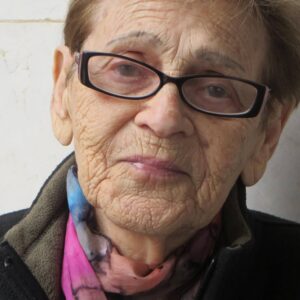
Edith Grosman is among those who tell their incredible stories of surviving the Holocaust in the award-winning documentary “999: The Forgotten Girls.” (Submitted by BCCC)
Grosman and others tell their incredible stories of survival first-hand in the award-winning documentary “999: The Forgotten Girls,” coming to BCCC at 6 p.m. Thursday, March 26. The free screening, supported by a Mark Schonwetter Foundation Grant, is presented by the College’s School of Social and Behavioral Science and the Holocaust and Genocide Studies certificate program, includes a question-and-answer session with Macadam.
The Slovak government paid the Nazis the equivalent of $3,000 to deport each girl. Through first-person testimony and rare archival material, we learn the little-known facts of the women’s camp in 1942 and how a handful of the girls managed against all odds to survive over three long years of hell on earth.
“Too many stories — especially those of young women — remain untold or overlooked,” said Paula Raimondo, Professor of Holocaust and Genocide Studies. “The first transport of Jewish girls from Slovakia to Auschwitz is not widely known, yet it reveals so much about deception, state complicity, gendered persecution, and resilience. When we bring these histories into the light, we not only honor the victims and survivors, we challenge ourselves to confront the systems that made such atrocities possible.”
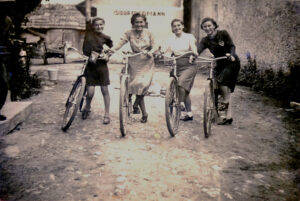
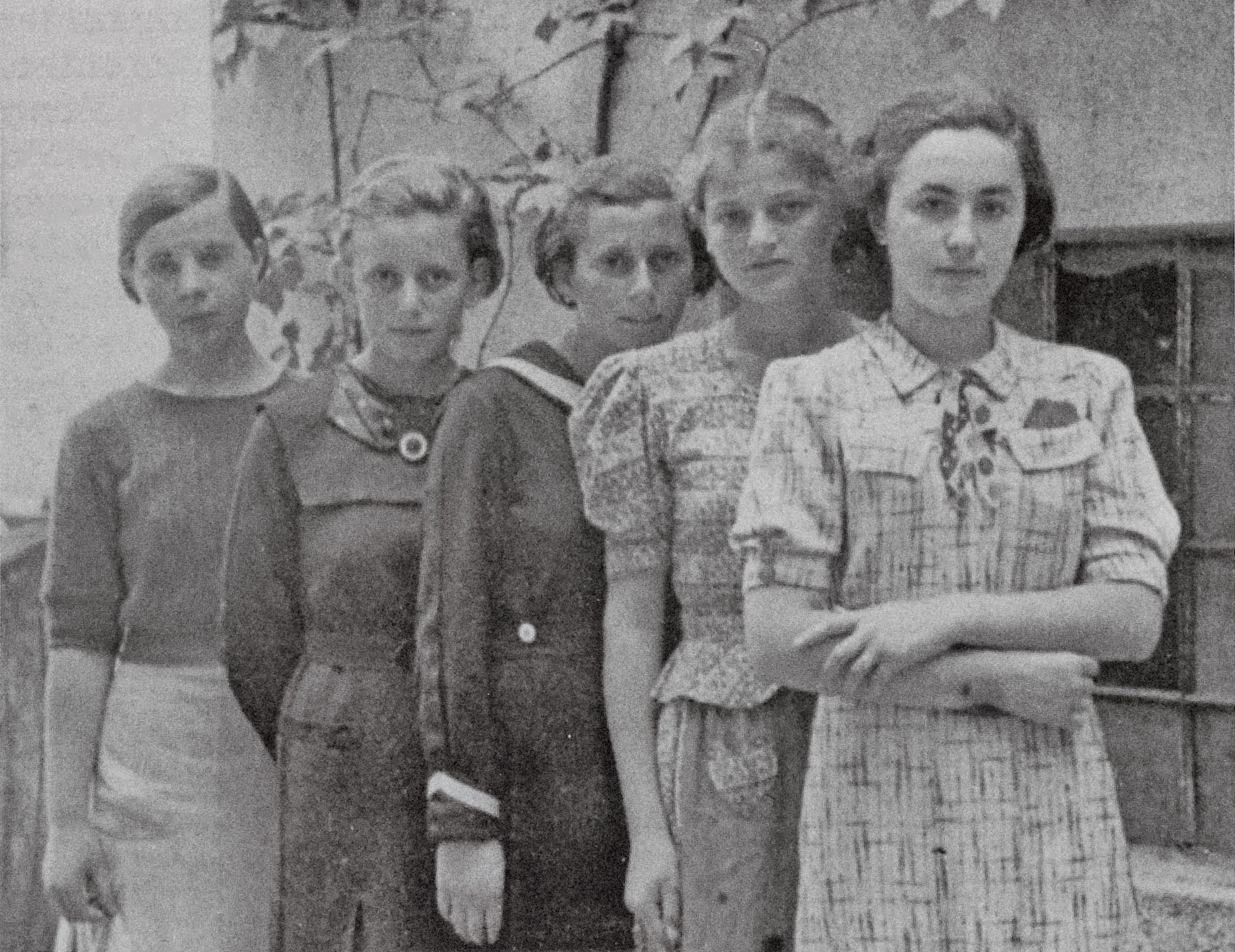
Edie Valo (left) and Ella Rutman (right), photographed with friends in 1941, were part of the first transport of Jewish women to Auschwitz. Their stories are told in the documentary “999: The Forgotten Girls” (PHOTO CREDIT: Courtesy of the Rutman family)
Macadam spent over 20 years researching and interviewing families, witnesses, and survivors of the first official transport to Auschwitz. Her internationally acclaimed book “999: The Extraordinary Young Women of the First Official Jewish Transport to Auschwitz” (published in 2020), on which the film is based, has been translated into 18 languages and was a PEN Finalist in 2021. The film was honored with the Human Rights Award at the Hamptons Documentary Fest, Best Documentary at the Miami Jewish Film Festival Audience Award, and as an official selection of the New York Jewish Film Festival.

Heather Dune Macadam, director, producer, and author, comes to Bucks County Community College March 26 to screen her award-winning documentary “999: The Forgotten Girls” about the first official transport of young Jewish women to Auschwitz. A Q&A will follow the film, presented by the School of Social and Behavioral Science and the Holocaust and Genocide Studies certificate program. (PHOTO CREDIT: Keith Barraclough)
“I am especially thrilled to offer this event in conjunction with our spring Rescue and Resistance course, in which students spend the semester examining moral courage, defiance, and survival under unimaginable circumstances,” added Raimondo. “Hearing this story — grounded in first-person testimony and Heather’s years of research — deepens that study in a profound way. It reminds us that resistance took many forms, including the daily, determined will to survive.”
Click here for a campus map and directions.
To learn more about the College’s Holocaust and Genocide Studies certificate program, contact the School of Social and Behavioral Science at sb@bucks.edu or 215-968-8270.
-
 Cops, Courts & Fire -Bensalem Township16 hours ago
Cops: Bensalem Man Orders Up to $70 Per Day in Food While Keeping His 70-Year-Old Dead Mother’s Body
-
 Cops, Courts & Fire -Falls Township4 weeks ago
Fairless Hill Man Arrested on False Imprisonment, Aggravated Assault Charges After Text Breakup
-

 Human Interest - Bensalem Township4 weeks ago
Nearby: 67 Year-Old Levittown Woman Charged for Threatening SEPTA Bus Passengers, Racially Incendiary Remarks
-
 Cops, Courts & Fire -Bristol Borough2 weeks ago
Bristol Borough Fire Chiefs Statement on Dorrance Street Fire
-
 Breaking News - Bensalem Township4 weeks ago
Predator Poachers Nab Philly Man Allegedly Seeking Sex with 11 Year-Old in Bensalem
-

 Breaking News - Bristol Borough2 weeks ago
Updated: Three-Alarm Fire in Bristol Borough Under Investigation
-
 Cops, Courts & Fire -Bristol Borough4 weeks ago
Cops: Bristol Man Charged with Robbery; Suspect Identified Via Sports Jacket Seen on Video During Altercation
-
Cops, Courts & Fire -Bensalem Township2 weeks ago
Cops: Motorist Driving “Erratically” on Street Rd Arrested for Fleeing, DUI